 Michael Turner
Key Takeaways
- The rinse aid dispenser is on the inner door panel, apart from the detergent cup, and is filled to the maximum line only.
- Overfilling shows as suds, tinted residue, sticky dispenser parts and spotted glassware.
- Adjust the dosage setting for streaking or spots instead of adding more liquid.
- Wipe up a spill at once; hand dish soap is not a fix for foam and can damage the pump seal.
- A cracked cap or a leaking dispenser needs a technician, because liquid on internal wiring is a real hazard.
The Bottom Line
Fill rinse aid to the maximum line, wipe up every drip and change the dosage setting instead of overfilling. A cracked or leaking dispenser needs a technician, and the price is confirmed after diagnosis, with a written estimate before work begins.
Monogram dishwasher rinse aid is the one consumable that people top up by eye, and the one that causes trouble when they top it up too far. The dispenser is small, the liquid is slippery and a spill goes unnoticed until the next cycle produces a tub full of foam. This guide covers where rinse aid goes in a Monogram dishwasher, how to fill it correctly, and what overfilling actually does, using the site's own safety notices on the subject.
| Sign | What it points at | What to do |
|---|---|---|
| Suds or foam inside during or after a cycle | Rinse aid overfilled or spilled | Wipe up the spill and run a rinse cycle |
| Blue or tinted residue on dishes or in the tub | Too much rinse aid released | Lower the dosage setting |
| Spots or streaks on glassware | Too little, or dosage set too low | Refill to the line, adjust the setting |
| Dispenser door sticky or hard to close | Rinse aid residue on the dispenser | Wipe the lip dry |
| Indicator light stays on after filling | Cap not seated, or a sensing fault | Press the cap firmly until it clicks |
Where Does Rinse Aid Go in a Monogram Dishwasher?
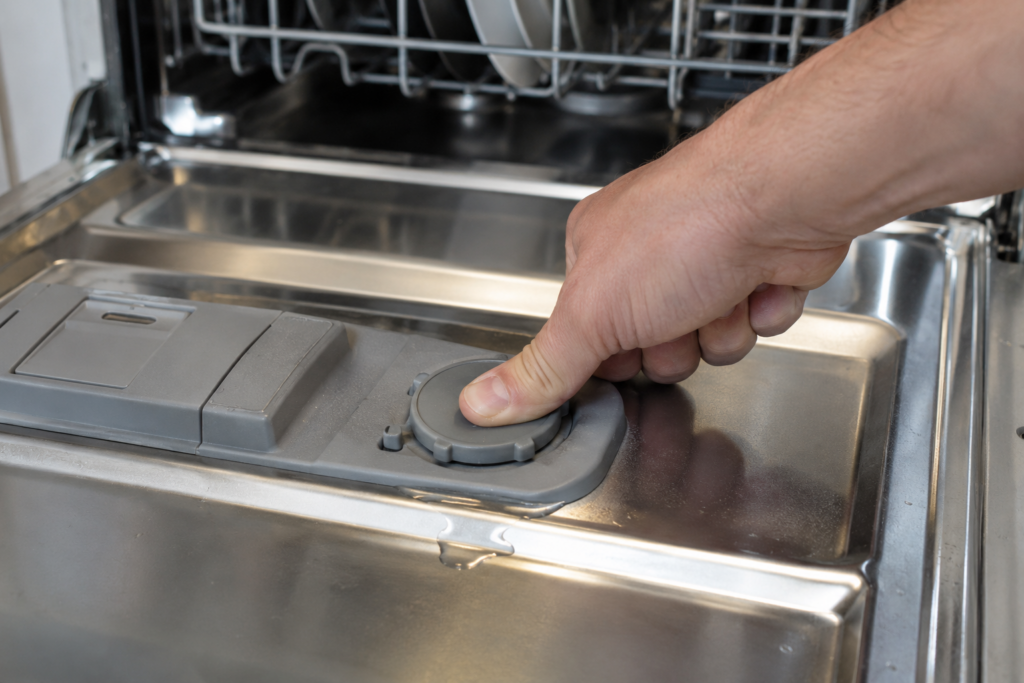
In the rinse aid dispenser on the inner panel of the door, which has its own cap and a fill window. The site's rinse aid notice describes opening the cap, filling slowly while watching the sight glass or fill indicator, and stopping at the maximum line. It is a separate compartment from the detergent dispenser, and the two are not interchangeable.
- Open the cap. It is on the inner door panel, apart from the detergent cup.
- Fill slowly. Watch the sight glass so you can stop at the line.
- Wipe up drips at once. A spill on the door lip suds in the next cycle.
- Press the cap until it clicks. An unseated cap can leak or leave the indicator lit.
- Check it again after a few loads. The level drops slowly, and an indicator that stays on is a reminder to refill.
How Much Rinse Aid Should You Use?
Fill to the maximum line and no further, then adjust the dosage setting if the results are not right. The notice says not to fill beyond the indicated maximum under any circumstances, and to consult your owner's manual for the dispenser settings on your model. Streaking or spots that persist are a reason to change the setting, not to add more liquid to the compartment.
In hard water a separate rinse aid matters more, which is what the site's maintenance guide says about very hard water. Check how often the indicator comes on after you set the dosage, and adjust one step at a time so you can tell what changed.
What Happens If You Overfill the Rinse Aid Dispenser?
Suds, residue and sticky parts, mainly. The site's notice lists foam inside the dishwasher, blue or tinted residue on dishes or the tub, spotting despite rinse aid and a sticky dispenser door as the warning signs. The notice adds that correct rinse aid management protects the dishwasher's internal seals and pump assembly from long-term exposure to surfactant.
- Foam during the cycle. Too much liquid released at once, or a spill on the lip.
- Residue on dishes. A dosage set too high for your water.
- A sticky door on the dispenser. Rinse aid dried on the hinge or lip.
If foam appears, do not keep running full cycles. Wipe up what you can, run an empty rinse, and check the dispenser again before the next load.
How to Clean Up a Rinse Aid Spill
Wipe it with a damp cloth straight away, including the door lip and the edge of the tub, and dry the area. A spill left to dry becomes a film that suds again when it is rewetted. If foam has already filled the tub, let it settle, wipe out what you can and run a rinse cycle with the tub empty.
Do not use hand dish soap to clear the foam. The site's maintenance guide warns that hand soap creates excessive foam and can damage the pump seal, so use only automatic dishwasher products in the machine.
Rinse Aid and Hard Water
Water hardness decides how much the rinse aid has to do, and it is the usual reason a setting that worked in one house fails in another. The site's maintenance guide says that in very hard water a separate rinse aid dispenser filled to the maximum line is worth using, and that the dosage dial inside the dispenser door is the thing to adjust if spots persist or dishes feel sticky.
- Spots on glasses. Check the level first, then raise the dosage one step.
- Foam after a refill. Too much went in, so wipe the lip and run a rinse.
- Sticky or tinted film. Lower the dosage one step, and wipe the dispenser lip.
- Cloudy glassware that does not wipe off. Mineral deposits, so descale the tub; the maintenance guide suggests doing it twice a year.
Why the Detergent Dispenser Matters Too
Because the two dispensers fail in similar ways and are easy to mistake for each other. The site's detergent dispenser notice lists detergent left in the cup after a cycle, a door that does not spring open, hardened buildup around the hinge and a white film on dishes as the signs of a failing dispenser. A monthly cleaning cycle with a dishwasher-safe cleaner and a check that the door springs open freely keep both in order.
The notice also warns against using more detergent than recommended, since excess can gum up the mechanism, and says gel detergents can leave residue that clogs the dispenser over time.
Why Rinse Aid Leaks Are Taken Seriously
Because liquid in the wrong place is a wiring problem. In May 2007 the Consumer Product Safety Commission announced a recall of about 2.5 million GE built-in dishwashers, among them a GE Monogram model, because liquid rinse aid could leak from the dispenser onto the internal wiring and cause an electrical short and overheating. Those machines were sold between 1997 and 2001, so the notice matters only for an old unit, but it shows why a cracked dispenser or a leak is worth a call.
If the dispenser cap is cracked or the dispenser leaks, the notice says the assembly may need replacing. A leak under the machine is a different matter, and the C9 page covers the leak code. Our Monogram dishwasher maintenance guide covers the rest of the routine, and the dishwasher safety guide covers the everyday risks. Monogram dishwasher repair includes dispensers and seals, and the price is confirmed after diagnosis with a written estimate before work begins. Schedule a visit or contact us with the model number.