 Michael Turner
 Key Takeaways
- Monogram freezer frost buildup is fed by humid air, so a failing door gasket and a frozen drain tube are the first things to check.
- The paper test finds a weak gasket: if the paper slides out easily, that section is failing.
- A manual defrost takes 24 to 48 hours with the unit unplugged and the door open, and clears the coil whatever the cause.
- If frost returns within 24 to 48 hours of a clean defrost, a defrost heater, thermostat or control has failed.
- Move food to other storage if the freezer cannot hold 0 degrees Fahrenheit.
The Bottom Line
Check the seal, clear the drain, defrost fully and clean the condenser; if frost returns within two days a defrost part has failed. The price of a repair is confirmed after diagnosis, with a written estimate before work begins.
A little frost in a freezer is normal; a slab of it on the back wall is the freezer telling you its defrost system has stopped keeping up. Frost is also the one freezer problem that owners can often prevent, because the most common feeders of it are a door seal that has lost its grip and a drain tube that has frozen over. This guide covers the maintenance side of the problem on Monogram freezers and the point at which maintenance stops being enough.
| What you see | What it points to | Do this |
|---|---|---|
| Thick frost on the back wall or coil cover | Defrost not clearing the evaporator (FF) | Check the door seal, then a manual defrost |
| Frost on the evaporator cover and a louder fan over days | Incomplete defrost cycles (DF) | Check the drain tube, then a manual defrost |
| Freezer above 0 degrees F with an alarm | Cooling failing, often from a frosted coil (tF) | Move the food, clean the condenser |
| Frost back within 48 hours of a defrost | A defrost part has failed | Book a technician |
What Causes Monogram Freezer Frost Buildup?
Frost comes from humid air meeting a cold coil, so any path that lets in more moisture than the defrost system can remove feeds it. On a Monogram freezer the site's FF and DF pages name four causes, and two of them are within an owner's reach.
- A failing door gasket. A deteriorated seal lets warm, humid air in continuously and overwhelms the defrost cycle. This is the one you can check yourself.
- A frozen or clogged drain tube. Melt water backs up and refreezes on the coil, so defrost never finishes.
- A failed defrost heater or thermostat. The heater burns out or the thermostat sticks open, and ice builds unchecked. This needs a technician.
- A faulty defrost timer or control. The adaptive defrost logic stops scheduling cycles at the right interval.
The Door Gasket Paper Test
Close the freezer door on a sheet of paper and try to pull it out, repeating at several points around the perimeter. Resistance means a good seal there; if the paper slides out easily, that section of the gasket is failing. Check the corners carefully, because the large gaskets on upright Monogram freezers have multiple magnetic strips and the corners are where they fail first.
A failing seal does not announce itself except through frost, so it is worth doing the test twice a year even with no code. A weak gasket is also the cheapest repair on the page, which makes it the right first suspect. If the paper test fails in only one corner, the gasket may be pulled out of its channel, not worn, and a technician can often tell you which on sight.
How Do You Defrost a Monogram Freezer Manually?
You unplug it, prop the door open and let every bit of ice melt, which takes 24 to 48 hours. The FF page gives that interval, and it clears the coil whatever caused the buildup, so it is a good diagnostic as well as a stopgap.
- Move the food first. Use a cooler with dry ice or a chest freezer for the whole period.
- Unplug and open the door. Lay towels along the floor to catch melt water.
- Let all the ice melt. Do not restore power until the coil and the back wall are completely clear.
- Restart and watch. If the code returns within 48 hours, a defrost part has failed.
Is a Frosted Freezer Safe for Food?
Only while it holds 0 degrees Fahrenheit. A freezer that cannot keep that is no longer safe storage, and the tF page treats the alarm as a reason to move everything at once. Meat, seafood or poultry that has fully thawed should be discarded if it reached 40 degrees or above for more than two hours.
Plan the manual defrost for a time when you can empty the freezer properly and keep the food cold elsewhere for two days, rather than squeezing it into a busy week and cutting the melt short; a coil that is only partly cleared brings the frost back quickly and leaves you unsure whether a part has failed. Do not rely on the display alone. A separate freezer thermometer tells you whether the temperature has actually risen, and a loud rattle or thump from the evaporator fan is often the blade meeting ice, so it is an early warning worth acting on.
Keeping the Drain Tube and Coils Clear
Two small jobs keep the defrost system working, and both are routine.
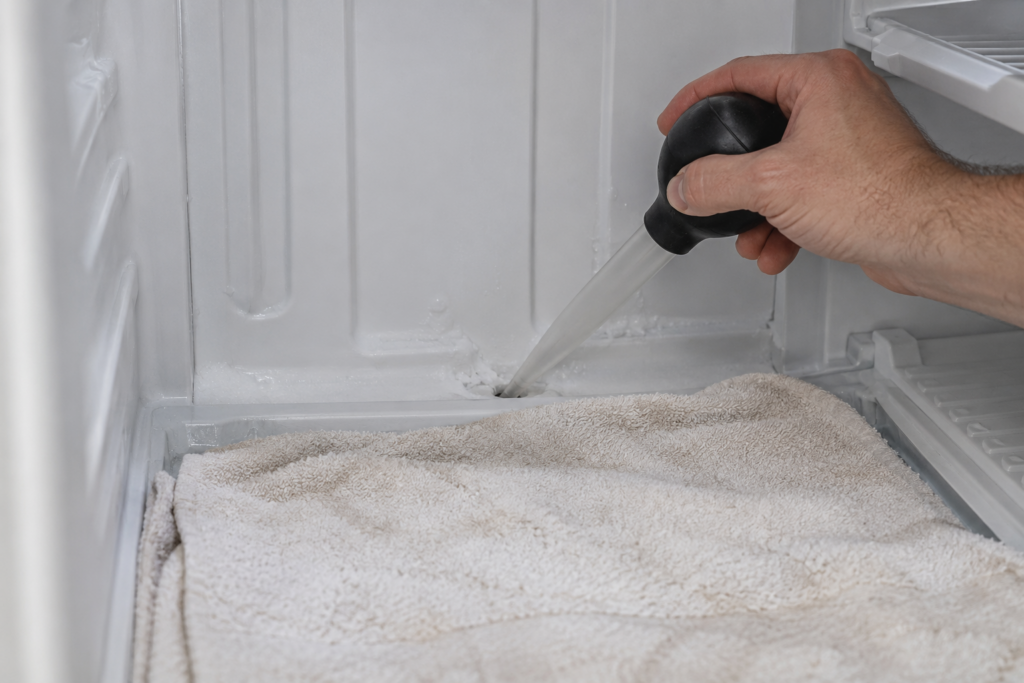
- Clear the drain tube. During a manual defrost, check the tube at the bottom of the evaporator area, and flush a frozen one with warm, not hot, water from a baster.
- Clean the condenser. The tF page says to do it every 6 to 12 months with a vacuum and a brush, whether or not a code has appeared.
- Keep the clearances. A freezer installed flush in cabinetry needs its toe-kick ventilation channel open, and one that is blocked traps heat.
What to Note Before You Call
A technician can arrive with the right part if you can describe the pattern, and frost leaves a clear one. Take a few minutes to record it before the visit, because the details fade once the ice has melted.
- Where the frost sits. The back wall, the evaporator cover or the door gasket each point somewhere different.
- When it returned. The hours or days between a clean defrost and the next code is the single most useful number.
- What the fan sounds like. A rattle or a thump that grows over days means the blade is meeting ice; the SY EF page covers a fan that has stopped.
- Which codes appeared. FF, DF and tF in sequence tell the story of a defrost fault that became a cooling fault.
The sequence matters because the three codes are one problem at different stages. A defrost fault leaves ice on the coil, the ice blocks the airflow, and only then does the temperature climb enough to raise the alarm. Catching it at the first stage is the cheapest point to act.
When Does Frost Mean a Failed Defrost Part?
When it comes back soon after a clean manual defrost. The FF page says a return within 24 to 48 hours means a defrost component has failed, and the DF page puts the same rule at three days. At that point maintenance has done what it can: the heater, the thermostat or the control needs testing and replacing.
Our Monogram freezer worth-repairing guide covers whether to repair or replace, and the Monogram refrigerator maintenance guide covers the refrigerator side. Freezer repair handles defrost parts and sealed-system faults, and the DF page lists what to note before you book. The price is confirmed after diagnosis, with a written estimate before work begins; schedule a visit or contact us.