 Michael Turner
 Key Takeaways
- Monogram ice maker repair cost starts from $120 for a sensor-level fault and from $200 for a valve or defrost fault.
- The diagnostic visit starts from $120, and the final figure is confirmed on site with a written estimate.
- A water inlet valve starts from $130 and a complete module assembly from $185.
- dE needs no part, and OP is usually an ice bridge or dirty sensor lens that you can clear yourself.
- Ask whether the valve, the bin sensor and the defrost system were tested before a module is replaced.
The Bottom Line
Read the code first: the cheapest outcomes need no part, and the dearest involve water control or refrigeration. The final price is confirmed after on-site diagnosis, with a written estimate before work begins.
An ice maker repair is hard to price from the outside because the same symptom, no ice, can come from a sensor with a film on it or from a refrigeration fault. The code on the display is the best guide, since each Monogram ice maker code points at a different part and a different level of work. This guide lists what each one starts at, using this site's own code pages, and explains why the spread is so wide.
| Code | What it points to | Starting point |
|---|---|---|
| dE | Door open too long | No parts: close it |
| OP | Ice bridge or dirty bin sensor | from $120 |
| FD | Freeze cycle timed out | from $150 |
| HF | Harvest or ejection failed | from $150 |
| tF | Compartment too warm | from $175 |
| CF | Continuous fill, valve stuck open | from $200 |
| FF | Frost buildup, defrost fault | from $200 |
How Much Does Monogram Ice Maker Repair Cost?
Monogram ice maker repair cost starts from $120 for a sensor-level fault and from $200 for a valve or defrost fault, and the figure for your machine is confirmed on site after diagnosis. The diagnostic visit itself starts from $120. Those starting points come from the typical repair figures on this site's ice maker code pages, and they cover parts plus the visit; they are not a quote for your machine.
Two repairs sit outside the code table because they are the standard fixes behind several codes. A water inlet valve starts from $130, and a complete ice maker module assembly starts from $185, according to the Monogram refrigerator cost guide. Both figures come from the refrigerator guide, so treat them as the starting point for a built-in ice maker in a refrigerator and ask what applies to a standalone unit.
Why Does the Price Depend on the Code?
Because the codes describe different systems, and the systems have different parts. The cheapest codes are about air, light and ice that has fused together; the dearest are about water control and refrigeration.
- Sensor and ice codes (OP, dE). An ice bridge across the bin sensor beam is by far the most common cause of OP, and clearing it needs no tools. Dirty or frosted sensor lenses are the second cause.
- Cycle codes (HF, FD). A harvest that cannot eject the ice, or a freeze that never finishes, points at the ejection mechanism, the coils or the refrigerant, and the work is correspondingly larger.
- Water codes (CF). A stuck-open inlet valve can flood the mold and pool water under the unit, so this fault is also about preventing water damage.
- Frost and temperature codes (FF, tF). A failed defrost heater or thermostat, or a leaking door seal, lets the evaporator frost up and the compartment warm.
Repairs That Cost Nothing, or Close to It
Some codes need no part, and it is worth ruling them out before you book. Two are common enough to try first.
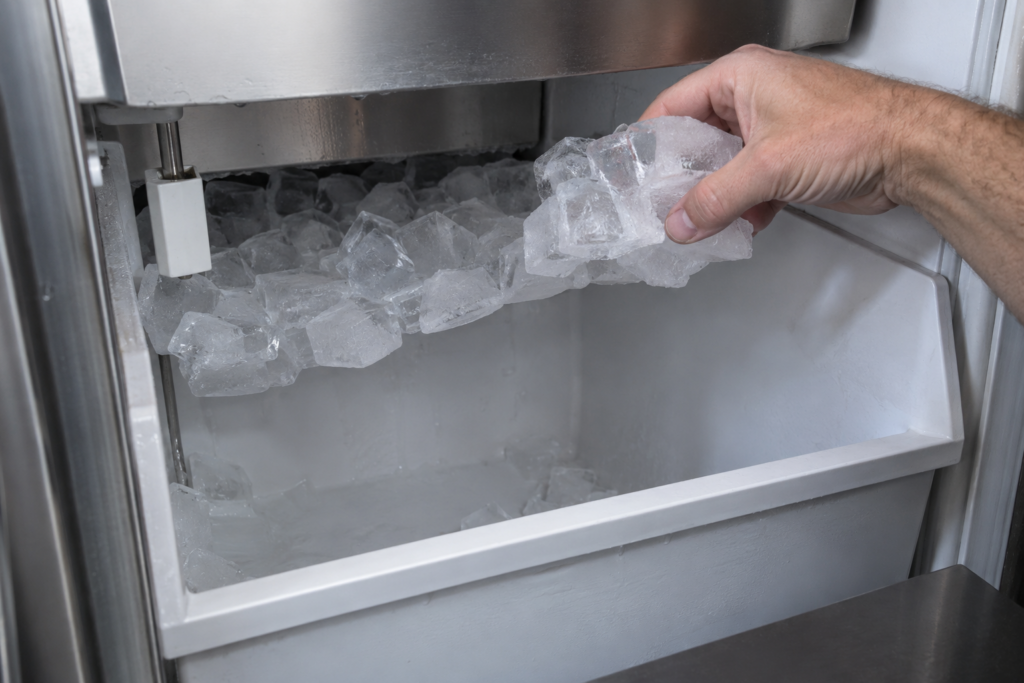
The dE code means the door or access panel was open too long, and the page lists the cost as no parts: close it fully, check the latch and clear the obstruction. The OP page covers the other: empty the bin, break up any bridge of fused ice, clean the two small sensor windows on the bin walls and power-cycle once. If OP returns immediately on restart, the sensor itself has failed, because the board always sees a blocked beam.
When Is the Ice Maker Module the Answer?
The module is the answer when ice production fails because of cycle timing or the ejector motor, not because of water, frost or a sensor. The refrigerator cost guide calls the complete module assembly the standard repair for those failures, and our guide to a Monogram ice maker HF harvest error shows how the ejection fault looks in practice.
The cheaper path is always to confirm the cause first. A technician who replaces the module without checking the water inlet valve, the bin sensor and the defrost system may fix nothing. Ask which of the three was tested.
- The valve. If water is the problem, a valve replacement can end the visit.
- The sensor. A bin sensor that reads full on an empty bin mimics a dead machine.
- The defrost system. Frost on the evaporator stops production long before the module is at fault.
What the Visit Checks, in Order
A diagnostic visit follows a sequence that goes from the cheapest cause to the dearest, and the sequence is the reason the first fee is worth paying. You can follow along, and it makes the estimate easier to read.
- The code and its history. Whether it appears at power-up, mid-cycle or only after long runs separates a sensor from a cycle fault.
- The water side. The inlet valve and the fill path are checked, since scale on a valve is the usual cause of a continuous fill.
- The bin sensor. The two small optical windows are inspected for film or frost, and the bin for a bridge of fused ice.
- The cold side. The evaporator is checked for frost, and the defrost heater, the thermostat and the door seal are tested.
Only after those does a module or a refrigeration job come into the estimate. If a quote jumps straight to the module, ask which of the four steps it came from.
Habits That Keep the Next Bill Small
Most of the repairs in the table start as something small that was left alone. A few habits stop that.
- Close the door fully. A door left ajar triggers dE and lets warm, humid air in, which feeds frost.
- Break up an ice bridge early. A fused clump across the sensor beam is the commonest cause of OP.
- Clean the coils. The FD page says to clean the condenser coils before resetting, because fouled coils lengthen the freeze.
- Do not ignore pooled water. Water under the unit with a stopped machine is CF until proven otherwise, and an open valve can flood a cabinet.
Is an Ice Maker Repair Worth the Cost?
Usually yes, when the fault is a sensor, a valve, a defrost part or a module, because those are modest against the price of the cabinet. It is a harder call when FD points at low refrigerant, since a leak means a sealed-system job rather than a part swap. For that, the question moves up a level, to whether the whole refrigerator or ice maker is worth the money, and our guide on whether to repair or replace a Monogram refrigerator covers the comparison.
Keep the symptoms in order when you book: what the display showed, when it last made ice and whether any water appeared on the floor. If the ice maker is not making ice at all, our Monogram ice maker not working guide runs the simple checks first. The wider table of parts is in the Monogram refrigerator repair costs guide.
Ice maker repair covers every code in the table, and a written estimate comes before any part is ordered. Schedule a visit or contact us with the code and the model number.