 Michael Turner
Key Takeaways
- Sweat on a refrigerator panel is usually humidity meeting a cold surface, not a failed sealed system.
- Wipe the area dry and see how fast it returns: a quick return in a humid room points to the room, a fixed spot points to a seal or a fitting.
- The paper test on the door gasket finds a seal that no longer grips, and warm air leaking in condenses on the cold surface.
- A supply line or fitting that keeps adding water at the same spot whatever the weather is a leak; shut the supply valve first.
- Sweat together with a warm interior, a loud fan or a code points to the cooling system and needs a diagnosis.
The Bottom Line
Treat sweat as condensation until it persists, then check the door seal, the airflow around the cabinet and the water line, in that order. If the interior is warm or water pools, book a diagnosis; the price is confirmed on site with a written estimate before work begins.
Beads of water on the outside of a built-in refrigerator, or a damp strip along the side panel and a puddle that appears behind the ice maker supply, make owners think the sealed system has failed. In most cases it has not. A refrigerator is a cold box in a warm, humid room, and anywhere cold metal meets moist air, water collects. The job is to decide which of three things you are looking at: ordinary condensation, a door that is not sealing, or a real leak, because the answers are very different.
| Where the moisture is | Most likely cause | First check |
|---|---|---|
| Along the door edge or panel seam | Door gasket not sealing, or door left ajar | The paper test on the gasket |
| On the outer side or front panel | Humid room, cold surface | Wipe dry and see how fast it returns |
| Behind the unit near the water line | Condensation on a cold supply line, or a leaking fitting | Wipe dry and watch the fitting |
| On the floor beneath | Drain pan overflow or a real leak | Look for a steady drip, not a film |
| Sweat plus a warm interior | A cooling fault, not just humidity | Check the interior temperatures |
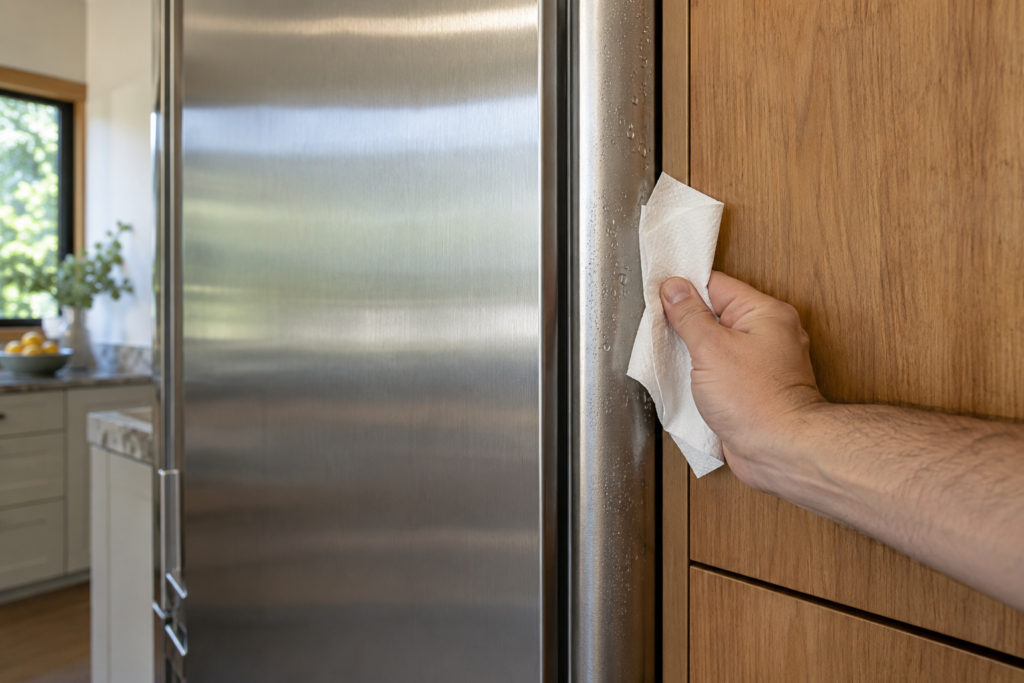
Why Is My Monogram Refrigerator Sweating?
Because a cold surface is dropping the air next to it below its dew point, which in a humid kitchen happens on any panel the cold reaches. A Monogram refrigerator sweating on a muggy day, after the door has been open for a while or after a long cooking session is a normal response to the conditions and not a defect. It becomes a problem when it is constant, when it comes with a warm interior or when it forms drips and pools.
The first test is simple. Wipe the area dry, wait an hour and note how quickly the moisture returns. Quick, heavy return in a humid room points to the room. Return in one fixed spot only, especially along a door edge, points to a seal or a cold bridge at that spot.
Is the Door Seal Letting Warm Air In?
Often, and it is the cheapest cause to check. The maintenance guide on this site describes a banknote test: close the door on a sheet of paper, and if it slides out with no resistance, the gasket is not gripping. A seal that is dirty, compressed or warped lets warm air leak in along the edge, and that air condenses on the cold surface behind it.
- Do the paper test at several points. A gasket can seal at the top and fail at the bottom.
- Wipe the whole perimeter. Mild detergent and a damp cloth remove the film that stops a seal gripping.
- Check that the door closes fully. Shelf contents and tall bottles can hold it a fraction open.
- Look at the hinges. A door that sags does not meet the seal evenly.
Our guide to the Monogram door handle and hinge covers the hinge side.
Does Airflow Around the Cabinet Matter?
Yes. A built-in refrigerator needs room to shed heat, and a unit that cannot, runs longer and colder at its surfaces. The compressor clearance notice says to follow the installation guide for the clearances on your model and to keep the base ventilation grille free of mats, baskets and stored items. If the cabinetry has been modified since installation, or a panel has been added, the airflow may have changed.
- Keep the grille clear. Nothing should sit in front of it.
- Vacuum the condenser area. The maintenance guide advises every three months.
- Do not push the unit hard against a wall if the installation guide calls for a gap.
What About the Water Line and the Ice Maker?
The supply line feeding the ice maker and dispenser carries cold water into a warm space, so it can sweat just as a cold glass does, and a fitting that is leaking looks very similar. The difference is persistence: condensation forms when humidity is high and a film dries out when it falls, while a leak keeps adding water at the same spot whatever the weather.
The notices on this site list the signs that point to a real fault: small puddles beneath or behind the unit, a steady drip at the inlet valve, hissing or dripping sounds, and a line that is kinked or abraded. The ice maker water pressure notice and the water line inspection notice give the checks, including shutting off the supply valve before you pull the unit out.
- Wipe the fitting dry and look again in an hour. A film that returns slowly is likely sweat; a bead that forms at a joint is a leak.
- Look for kinks or rubbing. A pinched line can leak or restrict flow.
- Shut the supply valve first if you see steady dripping, and have the fitting inspected.
When Sweating Signals a Fault
When it comes with other changes: a warm fresh-food section, a compressor that never cycles off, a louder fan, an alarm or a code on the display. The Monogram refrigerator not cooling guide covers that side, and the code pages such as CF describe a condenser fan fault. Sweat on its own is not a fault, but sweat that arrives with a temperature problem points to the cooling system and its airflow.
- Interior temperatures drifting up. Check with a thermometer rather than by feel.
- Water pooling under the unit. Not just a film on the panel.
- Frost where there was none. A sign of a seal or defrost problem.
What Not to Do
The urge to stop the moisture quickly leads to a few mistakes that make things worse. A built-in refrigerator is heavy, wired to the house and plumbed in, and nothing here needs force.
- Do not turn the temperature up to stop the sweat. It risks food safety, and the moisture is coming from the room, not the setting.
- Do not seal or tape the seam. Trapped moisture finds another way out and can stain the cabinetry.
- Do not pull the unit out alone. It is heavy, and the water line and power cord are behind it.
- Do not run a dehumidifier as a cure for a leak. It hides the symptom while the cause continues.
If the kitchen is humid in summer, a little sweat on a warm day is the unit doing its job in conditions it was not asked to ignore. Ventilation, running the range hood while cooking and keeping the door closed in the rush of a busy dinner all reduce it without any repair.
A diagnostic visit for a Monogram appliance starts from $120, with the final price confirmed after diagnosis and a written estimate before any work begins. To book, schedule a visit or read about Monogram refrigerator repair.