 Michael Turner
 Key Takeaways
- Monogram dishwasher C9 leak detected means a float sensor in the base pan found standing water and shut the machine down on purpose.
- The door gasket, a loose hose clamp, or a water inlet valve that will not fully close cause most C9 leaks.
- The sensor resets automatically once water is cleared — that reset is not the same as fixing the underlying leak.
- Running another cycle before finding the leak source risks sending more water past the same failing seal or valve.
- Diagnostic work starts from $120 and pinpoints the source before any part is replaced.
The Bottom Line
Monogram dishwasher C9 leak detected is the leak-protection system doing its job — stop the machine, check the gasket and hose connections, and book a diagnostic before running another cycle.
A Monogram dishwasher that stops mid-cycle and shows C9 is not describing a dirty filter or a slow drain. Monogram dishwasher C9 leak detected means the base pan sensor has found standing water where there should be none, and the control has shut the machine down on purpose rather than risk running another cycle over it.
| Code | What it means | What to do first |
|---|---|---|
| C9 | Water detected in the base pan | Stop the machine, find the leak source |
| PF | Power failure / cycle interrupted | Restart the cycle after checking for an outage |
| C1–C8 | Various fill and drain faults | See our dishwasher common-problems guide |
What Does the Monogram Dishwasher C9 Code Mean?
It means a float sensor in the base pan, underneath the tub, has detected water that should not be there. Monogram built this leak-protection system into its dishwashers specifically to catch a failure before it reaches the kitchen floor, and the C9 code is the system doing exactly what it was designed to do — stopping the machine, not causing the problem. The leak itself started somewhere upstream of the sensor, and finding that source is the actual repair.
Owners searching for this code are often standing over a dishwasher with visible water pooling at the base of the door, which is the same event described from the outside that C9 reports from the inside.
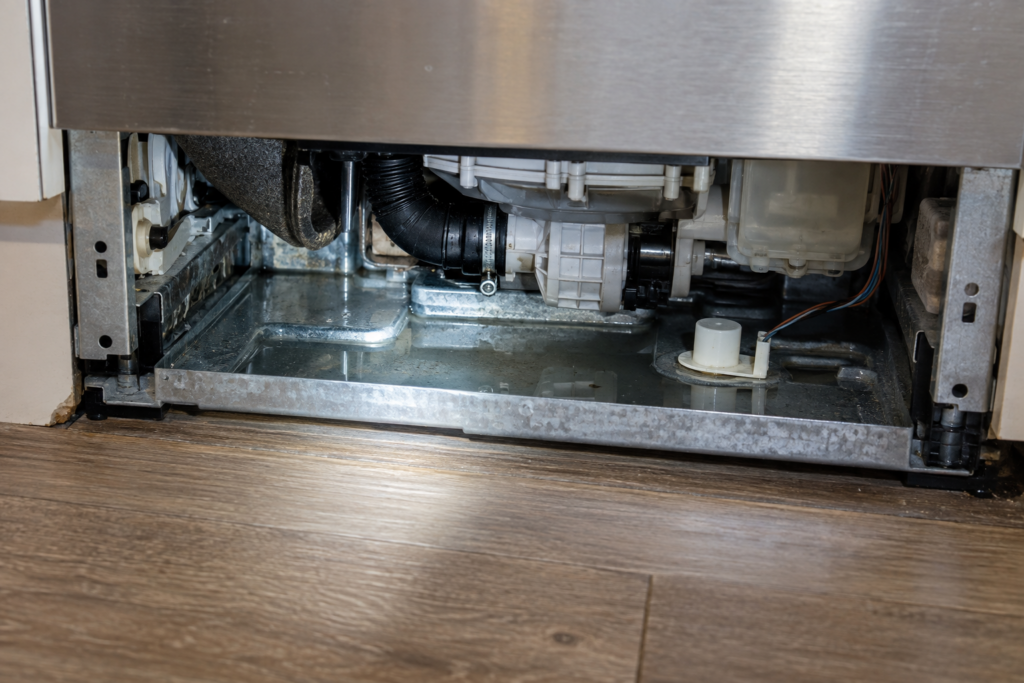
Where a Monogram Dishwasher Leak Usually Starts
Four sources account for the large majority of C9 calls:
- The door gasket. A gasket that has hardened or picked up food residue lets water spray past the door seal during the wash and rinse phases.
- The water inlet valve. A valve that does not fully close can let water trickle in between cycles, eventually overflowing the tub.
- A cracked or loose hose connection. The connections at the pump, the inlet valve and the drain hose all flex slightly with every cycle, and a clamp that has loosened over years of use is a common, inexpensive fix.
- An overfilled or misloaded rack. Tall items blocking the spray arm can redirect water outside the tub instead of just failing to clean properly.
A dishwasher that has posted C9 more than once, even after the visible water was cleaned up, has a leak that is still active somewhere in that list — the sensor does not reset the underlying cause, only the alarm.
Is It Safe to Run the Dishwasher Again After C9?
Not until the leak source is found. Running another cycle on a machine that has already leaked once risks sending more water past a failing seal or valve, and on a kitchen with a wood or laminate floor near the dishwasher, repeated leaks are how a $9 gasket problem turns into a much larger flooring repair. The float sensor itself resets automatically once the water is cleared, which means the dishwasher may start again without complaint even though the actual leak has not been fixed — the reset is not the same as the repair.
- Unplug or shut off power at the breaker rather than just closing the door on the cycle.
- Mop up standing water and check underneath the unit and along the toe-kick for signs of where it travelled from.
- Inspect the door gasket for cracking, hardening or gaps you can see with the door open.
- Check hose clamps at the back of the unit if you can access them safely, without disconnecting anything yourself.
- Book a diagnostic rather than running a test cycle to see if the leak repeats — that test cycle is exactly the risk described above.
What Fixing a C9 Leak Costs
Diagnostic work on a Monogram dishwasher leak starts from $120, which is what it takes to pressure-test the fill valve, inspect the gasket and hose connections, and confirm exactly where water is escaping before anything is replaced. Most C9 repairs turn out to be a gasket or a hose clamp, both inexpensive parts, though a failing water inlet valve costs somewhat more in parts and labor. The exact price is confirmed in writing once the source is found — no repair goes ahead on a guess. Related fill and drain fault codes are covered in our Monogram dishwasher not draining guide, and a dishwasher that also shows PF after a leak event is usually just recovering from the same power interruption that triggered the shutdown.
How Do You Prevent a Repeat Leak?
A short seasonal routine catches most of the causes above before they become a C9 call:
- Wipe the door gasket every few weeks with warm water, checking for cracking as you go.
- Confirm the unit is level — a dishwasher that leans even slightly can let water pool at one corner of the door seal instead of draining back into the tub.
- Avoid overloading the racks against the door, which stresses the gasket seal over time.
- Have hose connections checked during any other service visit, since they are easy to inspect while the unit is already pulled out.
Our Monogram dishwasher maintenance guide covers this routine in full, and our dishwasher repair service handles the gasket, valve and hose work in one visit. Schedule a diagnostic before running the machine again if C9 has appeared more than once.
C9 Does Not Mean the Dishwasher Is Broken
No — it means the dishwasher's safety system caught a leak before it became a bigger problem, which is a very different thing from the dishwasher itself failing. Built-in appliances installed under a counter carry real flood risk if a leak goes unnoticed, since water can travel along the cabinet base for some distance before it becomes visible on the kitchen floor. The float sensor behind C9 is designed to catch exactly that scenario early, and treating the alert as the appliance protecting your kitchen, rather than as a breakdown, is the more accurate way to read it.
That said, a leak still needs a source and a fix. Owners sometimes clean up the water, see the dishwasher run normally on the next cycle, and assume the issue resolved itself — but a gasket or hose connection that leaked once under normal operating pressure has not repaired itself between cycles. A second C9 event, sometimes weeks later, is common when the underlying cause was never addressed the first time. If cost is the deciding factor in whether to book a technician right away, our Monogram dishwasher repair costs guide breaks down what the gasket, valve and hose repairs behind most C9 calls typically run. Owners sometimes ask whether it is worth calling a technician for what looks like a minor leak, and the honest answer is that the size of the puddle on the floor tells you very little about the size of the repair — a hairline crack in a hose barb can leak steadily for weeks while a loose clamp produces a dramatic pool the first time it lets go. The float sensor treats both the same way, which is exactly why C9 is worth taking seriously regardless of how much water you actually found.