 Michael Turner
 Key Takeaways
- Monogram cooktop code E6 means the touch control panel circuit has failed — an electronics fault, unrelated to the induction elements.
- Monogram cooktop touch control repair or replace: repair the panel module in nearly every case, since it is far cheaper than the whole cooktop.
- Cleaning the panel first rules out moisture or residue mimicking E6 without any part having actually failed.
- Full cooktop replacement only makes sense if the glass is cracked or the induction elements have failed independently.
- Diagnostic work starts from $120 and confirms the exact cause before a panel module is ordered.
The Bottom Line
Monogram cooktop touch control repair or replace: repair, almost always. The panel module is a serviceable, inexpensive part next to the cooktop as a whole, and full replacement only makes sense with cracked glass or failed induction zones.
Repair, in nearly every case. A Monogram induction cooktop that will not respond to touch, or responds inconsistently across the panel, is usually reporting E6 — a fault in the touch control circuit itself rather than in the induction elements underneath the glass, and for E6 specifically the fix is narrower and cheaper than a whole-appliance replacement.
| Symptom | Cause | Repair or replace |
|---|---|---|
| Touch controls unresponsive | Control panel circuit fault (E6) | Repair — panel replacement |
| Some zones respond, others do not | Localized sensor fault under glass | Repair — diagnose first |
| Panel works after cleaning | Moisture or residue interference | No repair needed |
| Glass cooktop cracked | Physical damage | Replace the cooktop |
What Does the Monogram Cooktop E6 Code Mean?
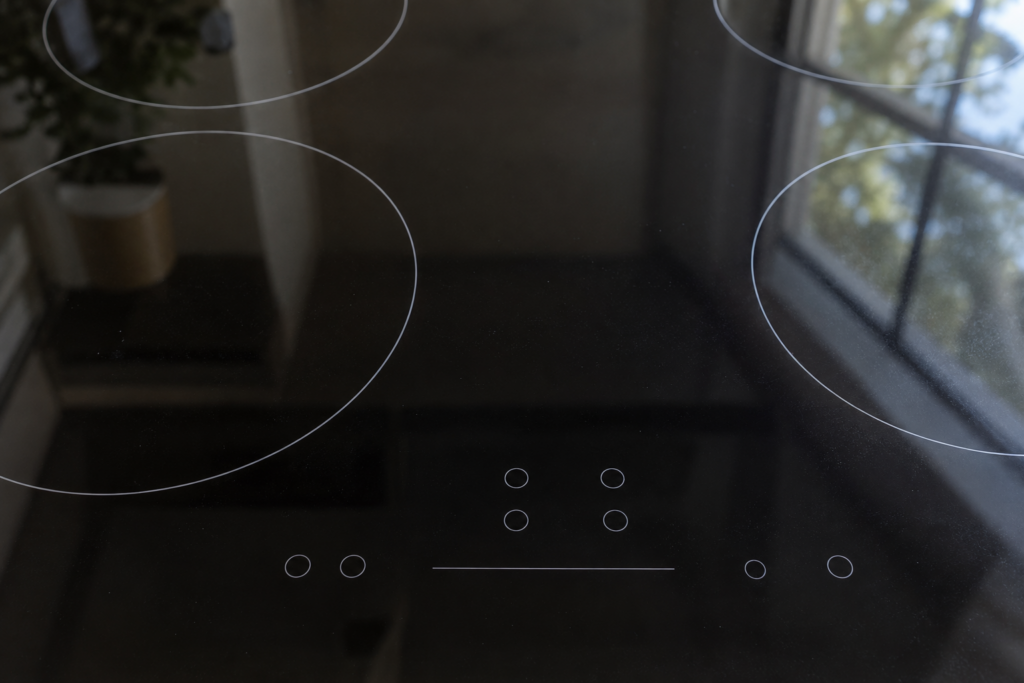
E6 means the touch control panel circuit has failed — the capacitive sensors that read a finger touch through the glass are not communicating reliably with the control board. This is an electronics fault, not a mechanical one, and it is entirely separate from the induction elements themselves, which can be in perfect working order underneath a panel that will not register a touch.
A related but different fault is cooktop E1, an induction temperature sensor fault — that one affects cooking performance directly, while E6 affects only your ability to control the cooktop at all.
Monogram Cooktop Touch Control Repair or Replace: Which Is It?
Repair, in nearly every case where E6 is the confirmed fault. The touch control assembly on a Monogram induction cooktop is a serviceable module that sits beneath the glass surface, and replacing it is a fraction of the cost of replacing the entire cooktop, which includes the induction coils, the glass surface, and the housing — none of which are affected by an E6 fault. Full cooktop replacement only makes sense when the glass itself is cracked or the induction elements have failed independently, which a diagnostic visit checks for before any quote is given.
- Clean the panel first with the cooktop off — residue, moisture, or a wet cloth left on the surface can mimic E6 without any part having failed.
- Test each zone individually if some respond and others do not, since that pattern points at a localized sensor rather than the whole panel circuit.
- Book a diagnostic if cleaning does not resolve it — a technician can confirm the panel circuit versus a wiring fault feeding it.
- Replace the panel module once confirmed — this restores full function without touching the induction elements or glass.
How This Compares to a Full Cooktop Replacement Decision
A control panel fault is one of the least expensive systems to fix on an induction cooktop, which is why it sits well inside a repair decision even on an older unit. Our broader guide to Monogram cooktop repair or replace covers the whole-appliance version of this question, for when the induction elements, the glass, and the control panel are all showing age together — a single E6 fault on an otherwise sound cooktop is a much easier call than that scenario.
- Only the panel is affected: repair the panel module.
- Panel plus one or more induction zones failing: weigh the combined repair cost against a new cooktop.
- Glass is cracked or chipped: replace the cooktop regardless of the panel's condition.
- Cooktop is under 5 years old: repair the panel — a control fault this early is uncommon and worth fixing properly.
What a Touch Control Panel Repair Costs
Diagnostic work on a Monogram cooktop control fault starts from $120, confirming whether E6 traces to the panel itself, a wiring fault, or residual moisture that cleaning resolves without a part being replaced. A full breakdown of appliance-wide cooktop pricing is in our Monogram cooktop repair costs guide, and general upkeep that keeps moisture and residue away from the panel is covered in our broader Monogram cooktop safety guide.
Our cooktop repair service covers the touch panel, induction elements, and control board together in one visit. Schedule a visit if a careful cleaning does not restore the panel.
Can You Still Cook With an Unresponsive Touch Panel?
Not safely and not practically in most cases, which is part of why this repair tends to get booked quickly rather than deferred. An E6 fault on the touch panel does not just make the cooktop inconvenient — depending on the state the panel was in when it failed, a zone may be stuck on, stuck off, or unreadable, none of which is something to work around by leaving a pot on an element you cannot confirm is actually set to a safe level. This is a different situation from a cosmetic issue that can wait; an induction cooktop you cannot reliably turn off is a cooktop that should not be left running unattended.
- Panel completely unresponsive: disconnect power at the breaker rather than leaving the cooktop plugged in unsupervised.
- One zone stuck on: treat it as a hazard, not an inconvenience, until a technician has looked at it.
- Panel responds but with a delay: usable in the short term with caution, but worth booking a repair before it worsens.
- Panel works only after multiple presses: an early sign of the same fault, worth addressing before it fails completely.
Because the fix for E6 is almost always a straightforward module swap rather than an extended diagnosis, most owners find it faster and less disruptive to book the repair promptly than to work around an unreliable cooktop for weeks while deciding.
Why Induction Touch Panels Fail in the First Place
Capacitive touch sensors read a small change in electrical charge when a finger presses the glass, and that sensitivity is also what makes the panel vulnerable to a handful of everyday kitchen conditions. Understanding the common causes helps prevent a repeat failure after the panel is fixed:
- Standing liquid on the glass during use can register as a continuous touch and confuse the sensor circuit.
- A damp cloth left on the surface after cleaning has the same effect, and is one of the most common preventable causes.
- Heat cycling over years of use gradually stresses the solder joints connecting the sensor array to the control board.
- A control board that has taken a power surge can damage the touch circuit specifically while leaving the induction elements themselves unaffected.
Drying the cooktop fully after cleaning, rather than leaving it to air dry with a damp cloth on the surface, is a small habit that meaningfully reduces the odds of a repeat E6 fault after a panel replacement. A cooktop installed near a sink or a frequently used kettle is worth a closer look at cleaning habits specifically, since incidental splashing is a common, easily overlooked source of the moisture that trips the touch circuit.